Soloist or member of the orchestra?
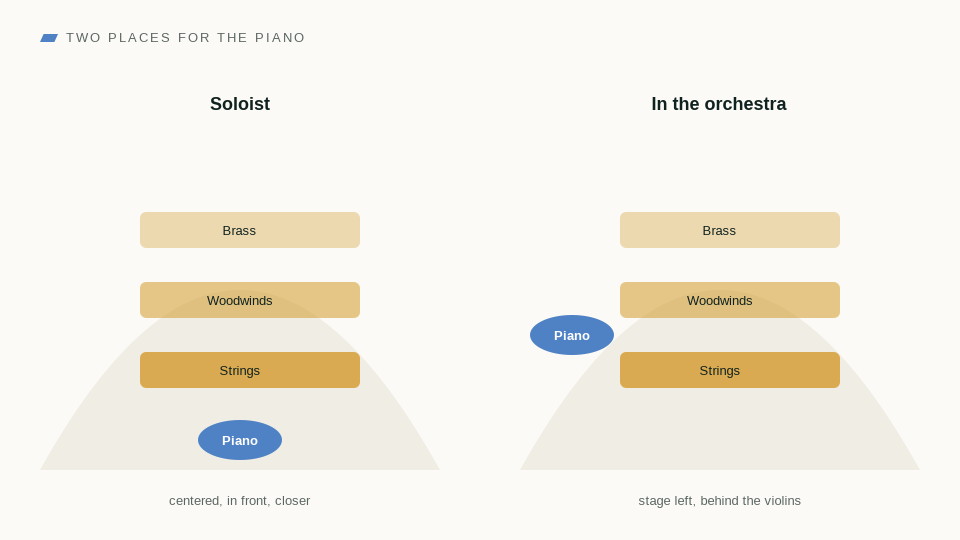
Everything starts from this question. In a concerto, the piano is in front of the orchestra, in the center, with a closer, wider sound. In film music, it's often inside the orchestra, often behind the strings, playing arpeggios or isolated notes that need to blend in.
| Solo piano | Piano in the orchestra | |
|---|---|---|
| Place | center, in front | left side, behind the violins |
| Mics | close and mid | mid and room |
| Width | wide | narrow |
| Reverb | less than the orchestra | like the neighboring sections |
| Highs | present | slightly softened |
Step 1: more distant mics
A piano recorded above the hammers sounds percussive and intimate: perfect on its own, too present with an orchestra. In an orchestral context, favor a more distant recording: toward the tail for warmth, and a pair in the room for cohesion. The tutorial on placing the mics of a virtual piano details each position.
Step 2: EQ against the strings
- Lows: the piano goes very low, like the double basses. Cut below 40 to 60 Hz, and leave the bass of the harmony to the low strings when they play.
- 200 to 400 Hz: the range that thickens the mix. Remove 2 to 3 dB if the piano and the cellos blend into mush.
- 2 to 4 kHz: that's the piano's attack. Keeping it lets it cut through the orchestra without being loud.
- Extreme highs: slightly softened for a piano inside the orchestra, further away.
Step 3: the same hall as the orchestra
The piano must share the orchestra's hall. If your virtual piano has its own built-in Reverb, reduce it or turn it off, and send it to the shared Reverb, at an amount close to the neighboring sections (lower if it's a soloist). Two different Reverbs, and the piano sounds recorded somewhere else. See piano Reverb.
Step 4: the writing helps the mix
- Avoid full chords in the low mids during string pads: they mask each other.
- The piano cuts through the orchestra in the high register, with isolated notes or arpeggios: it's the typical film music sound.
- Double a string melody on piano one or two octaves higher: you gain definition without raising the level.
With SymphoniquePiano: changing mics without re-recording
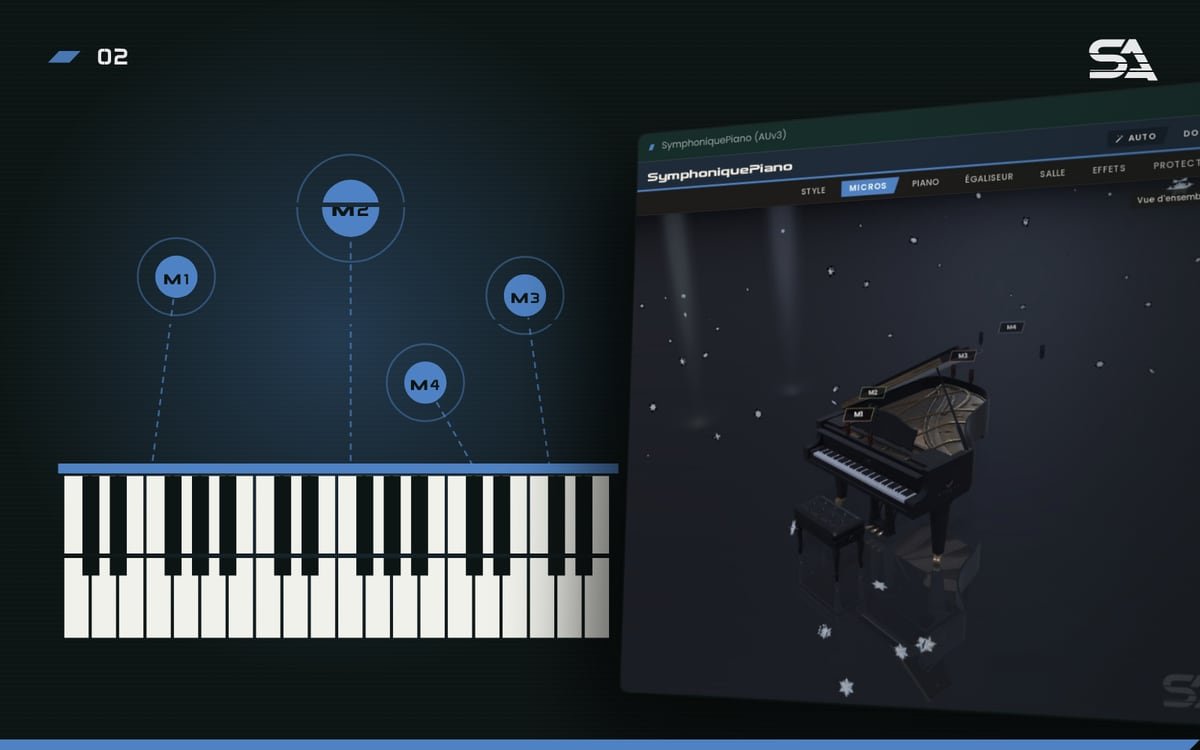
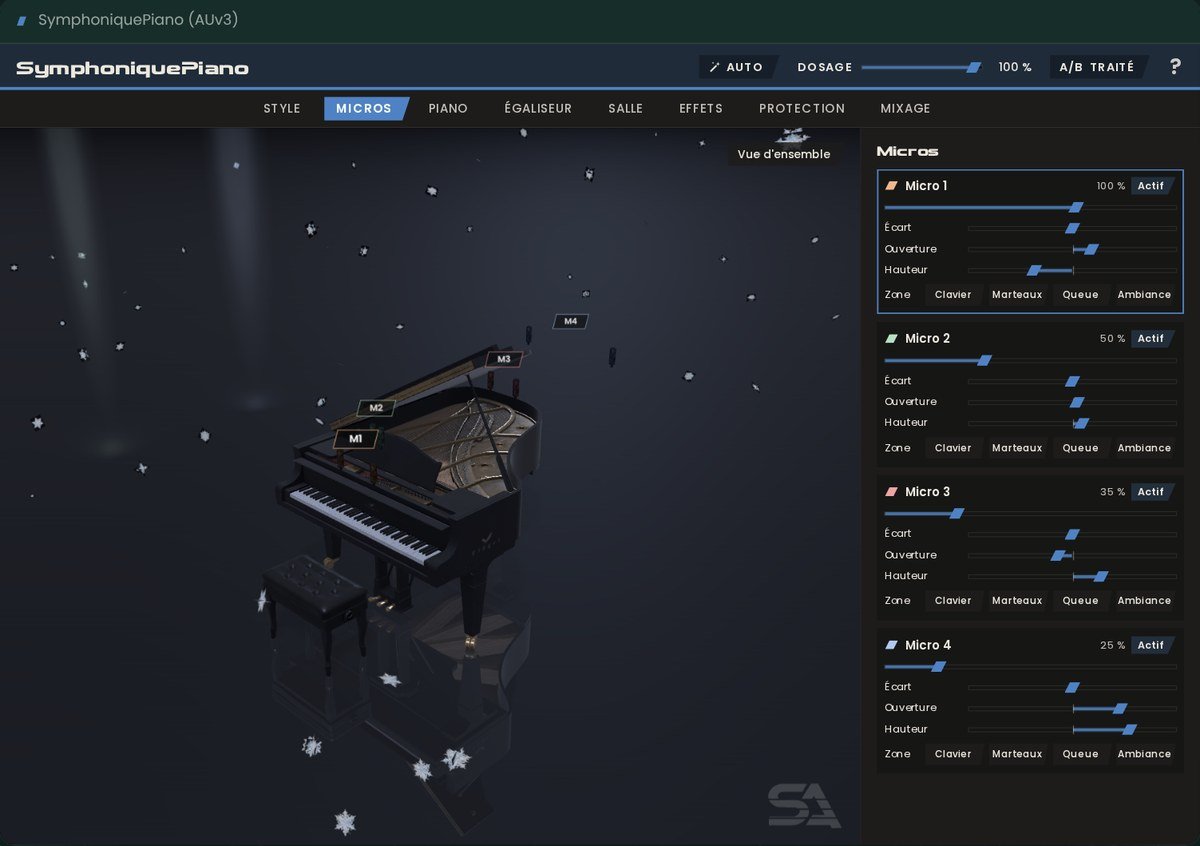
SymphoniquePiano goes after your virtual piano and adds four virtual mics, to place on the keys, the hammers, the tail or in the room. For an orchestral piano, you raise the Tail and Ambient mics, and lower the hammers. The natural room shares a single Tail between the four mics, and the Existing reverb setting measures the one contained in your piano to reduce its own accordingly.
Frequently asked questions
Where should the piano go in an orchestra?
As a soloist: in the center, in front of the orchestra. Inside the orchestra: on the left, behind the first violins, often near the harp.
Why does my piano sound separate from the orchestra?
Most often, it's too close (mics above the hammers) and in a different Reverb. Move the recording further away and send it through the orchestra's hall.
What EQ for a piano with an orchestra?
Low cut around 40 to 60 Hz, a little less 200 to 400 Hz if it blends with the cellos, and keep the attack around 2 to 4 kHz so it cuts through without being loud.
Should the piano be wide stereo with an orchestra?
As a soloist, yes, moderately. Inside the orchestra, narrow it: a piano that takes up the whole width takes the place of the entire stage.
Updated on October 30, 2026.